

Capital In Motion: What the RootsToFoods Capital Series Is Revealing
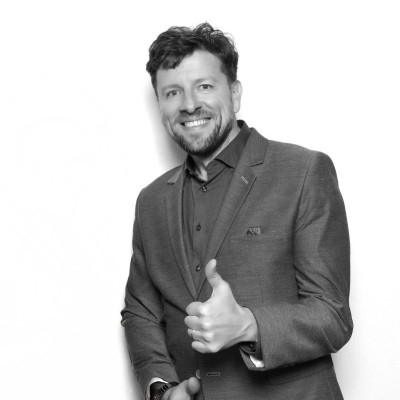
I started the RootsToFoods Capital Series with a hunch that the gap between impact capital and impact deployment was under-examined. Five episodes in, the conversations have been more clarifying — and more energizing — than I anticipated.
What keeps emerging across every guest, every conversation, is something genuinely hopeful: the architecture for moving capital is being built. Not everywhere, not fast enough, but it is being built — by practitioners who have spent careers learning what actually works, and who are now willing to say it plainly.
What We’re Learning
Nathaniel Heller of Geneva Global opened the series with a diagnosis that reframes the whole conversation. The deployment gap isn’t a supply problem — capital and intent are both present. What makes the difference is the quality of what’s on the ground: organizations with genuine capacity, clear theories of change, and leadership that can deliver. When those conditions exist, capital moves. That’s the signal worth chasing.
Joan Larrea of Convergence showed us in Episode 2 what the right instrument looks like. Blended finance, properly structured, is a precision tool — it identifies a specific, nameable risk, absorbs it with catalytic capital, and unlocks commercial investment at multiples.
The data bears this out: $1 of catalytic capital mobilizes on average $4.10 of other investment — but Joan was careful to note that of that amount, only about $1.80 is genuinely private, for-profit capital. That gap is the real frontier.
One transaction she walked us through made the point vividly: a $25 million guarantee from the MacArthur Foundation, combined with a first-loss investment from FMO, the Dutch development bank, unlocked $1.1 billion of institutional capital managed by Allianz Global Investors, with investors including Allianz and Skandia — all flowing into emerging and frontier markets.
The structure did what the relationship alone could not. The blended finance market now stands at roughly $25 billion annually, growing at around 5% per year — significant, but nowhere near the scale the opportunity demands.
Impact & Success
The conversation I keep coming back to is Episode 4 with Dr. Frannie Léautier of SouthBridge Investments. The opportunity she describes is staggering in the best possible sense: roughly $4 trillion in African institutional savings — pension funds, sovereign wealth funds, insurance companies — that could be redirected from government securities into the infrastructure, agriculture, and SME sectors that create jobs and build the continent.
The continent needs to create over 20 million jobs per year to keep pace with its growing workforce. The capital to help fund that future already exists within Africa.
What Dr. Léautier has spent thirty years at the World Bank, AfDB, and TDB learning to build is the intermediation architecture that makes it rational — not just aspirational — for that capital to move. Her conclusion is clear: African capital is behaving exactly as the system has designed it to behave. The fix is redesigning the system. That work is advancing.
Jeff Hoffman — co-founder of Priceline and Chairman of the Global Entrepreneurship Network — closed Wave 1 with the entrepreneurial perspective that ties it all together. Across more than 190 countries, his consistent finding is that the ecosystems capable of absorbing and deploying capital are built deliberately, by people who stay in the work long enough to see it compound. The pipeline of investable opportunity is growing. The builders are there.
Key Insight
Wave 2 of the RootsToFoods.com Capital Series launches in September 2026 and adds a dimension that has been implicit across all five conversations: moving capital isn’t only a conditions challenge — it’s a connectivity challenge.
The right capital and the right opportunities often exist simultaneously, on different sides of a relationship gap. Consider this: nearly $400 billion sits in US donor advised funds alone, with an estimated 95% not actively being put to work. That is latent capital waiting for the right corridor, the right coalition, the right moment of trust.
How Forum for Impact Connects to This Work
Michael Meehan, Founder of Forum for Impact, joins the series in Wave 2 to explore exactly that — how trusted global networks and curated corridors are actively rewiring where impact capital flows, connecting pools of capital in the GCC, the Middle East, and global family offices with opportunities across Africa, the Caribbean, and emerging markets.
Looking Ahead
What excites me most heading into Wave 2 is a shift that doesn’t get enough attention: the rise of South-South corridors.
Capital and entrepreneurial energy moving directly between Africa and India, between Africa and Indonesia, and across emerging markets that share development trajectories, complementary strengths, and growing appetite for collaboration.
This isn’t a future trend. It’s already happening. And the increase in economic activity it’s beginning to generate — in infrastructure, agriculture, and digital finance — is one of the most compelling stories in global capital today.
Both the series and the work Forum for Impact is doing in convening leaders across these regions are, in different ways, trying to accelerate exactly that.
If any of this connects with work you’re doing — or capital you’re ready to move — I’d welcome the conversation. The series is at rootstofoods.com and on LinkedIn.